A Good Foundation Starts With the Soil in San Marcos
The slab you see is the easy part; what holds it up is the ground, and that's where good foundation work begins.
October 16, 2026 · 3 min read
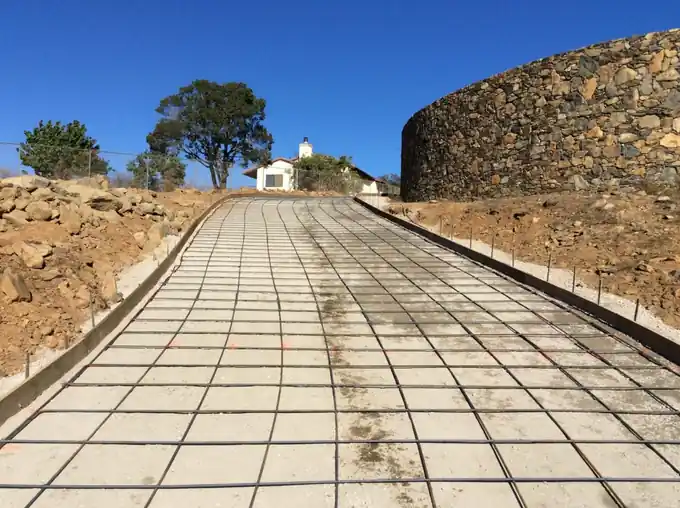
When people picture a foundation, they picture the concrete. The slab, the footings, the finished edge. But a foundation is really a partnership between the concrete and the ground under it, and the ground is the partner you don't get to choose. Good foundation work starts by understanding it.
Why the soil comes first
Concrete is very strong when you squeeze it and much weaker when you try to bend or pull it. A foundation works only as long as the ground beneath it stays put. If the soil settles unevenly, the slab above has to bridge the gap, and that's how cracks, sticking doors and sloping floors begin.
Soils behave differently from one another. Sandy and gravelly soils drain well and compact firmly. Clay swells when it's wet and shrinks when it dries, which moves whatever sits on top. Loose fill, which turns up on graded lots and around older structures, can settle over time. Hillsides add their own questions about slope, drainage and how well the ground holds together.
Starting with San Marcos
Albert Cruz Jr. frames it the same way in his FAQ: foundation stability starts with the soil and the local environment in San Marcos. Conditions vary a great deal from lot to lot, even on the same street, so he looks at each project's requirements for long-term stability instead of dropping the same slab on every property.
Ground prep and reinforcement
Once the ground is understood, it gets prepared. The FAQ answer is brief: the right reinforcement and proper ground prep. In practice that covers several steps.
- Clearing and grading the area so the base has a stable, level starting point.
- Compacting the soil and any added base material in layers, so it won't settle later.
- Setting forms that define the edges and the thickness of the slab or footing.
- Placing reinforcing steel, usually rebar, in a grid and holding it up inside the concrete instead of letting it lie on the dirt.
- Planning drainage so water moves away from the foundation and doesn't pool against it.
Rebar lying on the ground at the bottom of a pour does very little. It has to sit within the concrete, supported on chairs or blocks, to do its job of holding the slab together when it's stressed. Photos of work in progress show it clearly: a tied steel grid laid out over compacted ground before any concrete arrives.
What happens during the pour
Preparation earns most of the credit for the outcome, but the pour matters too. Albert's site says his crew monitors temperature and mix quality during the pour. Both are worth watching. Hot weather makes concrete set faster, which leaves less time to place and finish it. Extra water added at the site to make concrete easier to work weakens it. Paying attention to both is what separates a clean pour from a rushed one.
After the pour, concrete needs to cure, which means staying damp and protected while it gains strength. Curing is quiet work that's easy to neglect, and skipping it costs strength you can't add back later.
New construction and engineered plans
On a new build, the foundation and flatwork follow the plans for the project. Albert describes his new construction work as meeting engineering and local building requirements, which makes the concrete one part of a larger set of drawings rather than a freestanding job. If an engineer has specified the slab thickness, footing depth or steel, the contractor's job is to build it as drawn.
If there's no engineered plan, say for a modest slab or a set of stairs, ask your contractor how the ground and the loads were assessed. A clear answer tells you the work isn't being done on autopilot.
Questions worth asking before the pour
- What did you find when you looked at the soil on this lot?
- How will the ground be compacted, and what goes under the concrete?
- What reinforcement is going in, and how will it be held in position?
- Where will water drain once the foundation is in?
- Who looks over the work before the concrete is placed?
A free estimate from Albert Cruz Jr Concrete starts with a conversation about your property. Albert has held his California C-8 concrete contractor license since 1990. Call (760) 716-4142 to talk through a foundation, slab or other concrete project in San Marcos or elsewhere in North County.
Albert Cruz Jr Concrete, (760) 716-4142
Call (760) 716-4142More articles
Concrete or Asphalt for a North County Driveway
Both materials can work, but they age differently under San Diego County sun, and the surface is only half of the job.
Stamped Concrete or Pavers: Which Fits Your Patio
Both can give you the look of stone or brick, and the real difference shows up in how each one holds up after the crew leaves.